
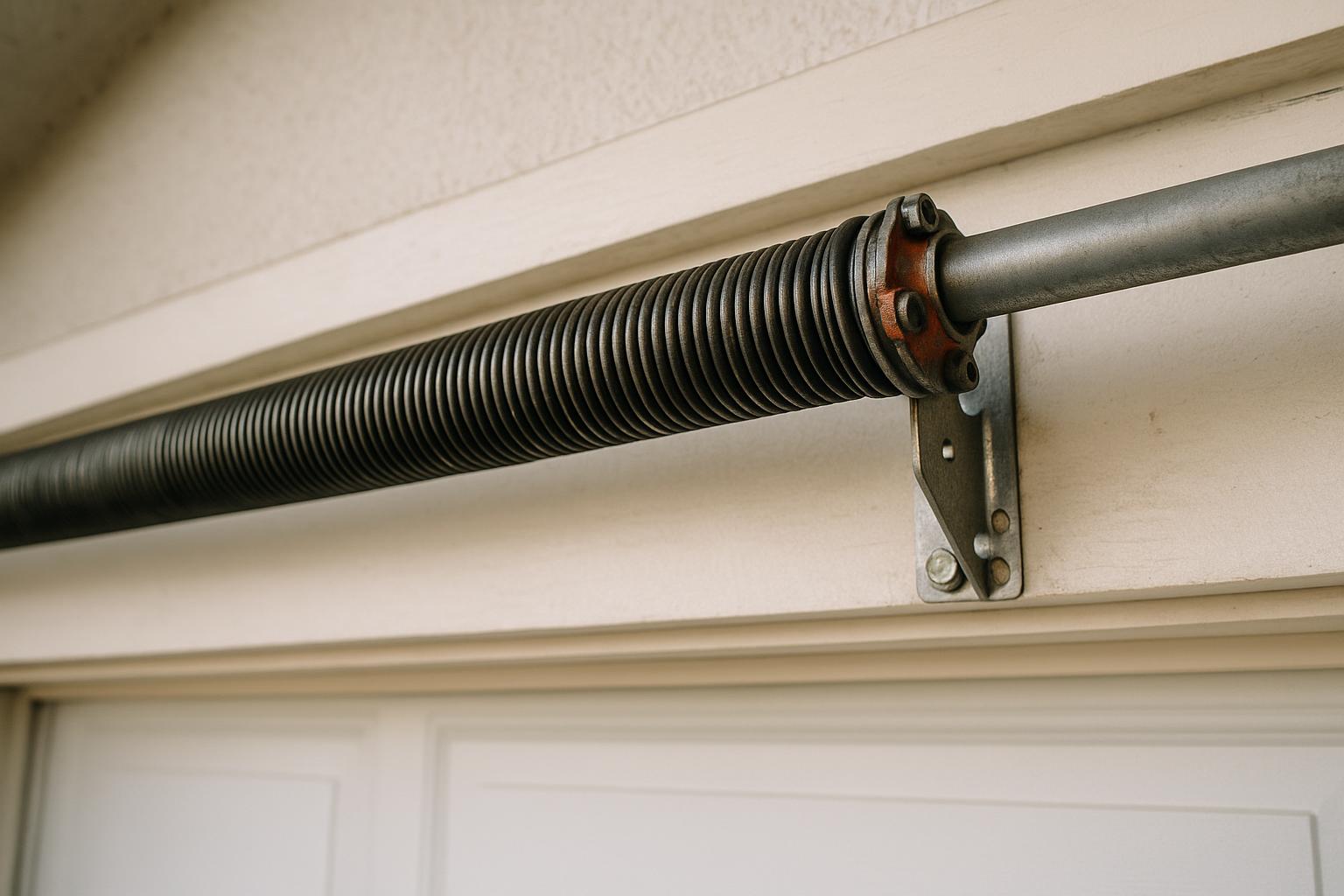
Your Garage Door Springs Are Doing More Work Than You Think
Every time you open and close your garage door, the springs are doing the heavy lifting — literally. A standard residential garage door can weigh anywhere from 130 to 350 pounds, and without properly functioning springs, your opener alone can't handle that load. For homeowners in Lake City, where we use our garages daily for vehicles, storage, and workshop space, those springs are under constant stress.
Yet most people never think about their garage door springs until something goes wrong. A snapped spring can leave your car trapped inside, create a serious safety hazard, or cause expensive damage to your opener system. Understanding when and why to replace your springs can save you from an unexpected — and potentially dangerous — situation.
How Long Do Garage Door Springs Last?
The lifespan of a garage door spring is measured in cycles. One cycle equals one full open-and-close of the door. Most standard torsion springs are rated for approximately 10,000 cycles, while high-cycle springs can last 25,000 to 50,000 cycles or more.
So what does that mean in real-world terms?
- If you open and close your door 2 times per day: Standard springs may last about 13-14 years.
- If you open and close your door 4 times per day: Expect roughly 7 years of life from standard springs.
- If you open and close your door 6-8 times per day: Springs may wear out in as little as 3-5 years.
Many families in Lake City use their garage door as the primary entry point to their home, which means higher daily cycle counts and faster wear. If you have teenagers driving, a home business, or frequently access your garage for lawn equipment and tools, your springs are working overtime.
Torsion Springs vs. Extension Springs
Before we go further, it helps to know which type of springs your garage door uses:
Torsion Springs
These are mounted on a metal shaft directly above the garage door opening. They use torque to lift the door and are the more common type found on modern residential doors. Torsion springs tend to be more durable, offer smoother operation, and are generally considered safer.
Extension Springs
These run along the horizontal tracks on either side of the door. They stretch and contract to provide lifting force. Extension springs are more common on older or lighter doors. They can be more hazardous when they break because they're under significant tension and can fly off if not properly secured with safety cables.
Regardless of the type your home uses, both will eventually wear out and need replacement.
Warning Signs Your Springs Need Replacement
Don't wait for a spring to snap before taking action. Here are the key warning signs that your garage door springs are nearing the end of their life:
- The door feels heavier than usual: If your garage door seems difficult to lift manually, the springs may be losing tension.
- The door doesn't stay open: A properly balanced door should stay in place when opened halfway. If it slides down, the springs are likely weakening.
- Visible gaps in the spring coils: When a torsion spring is nearing failure, you may notice gaps or stretched sections in the coil.
- The door opens unevenly: If one side rises faster than the other, one spring may be weaker or already broken.
- Your opener is struggling: When springs lose their strength, the opener has to work harder, which can lead to premature motor burnout.
- Rust or corrosion on the springs: Florida's humidity — something we deal with constantly here in Lake City — accelerates rust on metal components, which weakens springs and shortens their lifespan.
How Florida's Climate Affects Your Springs
Living in North Central Florida means our garage door components face unique challenges. The combination of heat, humidity, and occasional temperature swings can take a toll on metal springs. Moisture promotes rust, which creates friction and weakens the coils over time. The intense summer heat can also cause metal to expand and contract repeatedly, contributing to fatigue.
This is one reason why regular maintenance matters so much in our area. A simple application of lubricant to your springs two to three times a year can reduce friction, slow corrosion, and extend their useful life. It's a small step that can add years to your springs.
Why You Should Never Replace Garage Door Springs Yourself
We understand the DIY spirit — it's alive and well in Lake City. But garage door spring replacement is one job that should always be left to trained professionals. Here's why:
- Extreme tension: Torsion springs are wound under tremendous force. A spring that releases unexpectedly can cause severe injury or even death.
- Specialized tools required: Proper replacement requires winding bars, clamps, and other tools that most homeowners don't have.
- Precise calibration: Springs must be wound to the exact tension for your specific door weight and size. Incorrect tension leads to uneven wear, opener damage, or safety issues.
- Matching matters: If one spring breaks, it's generally recommended to replace both springs at the same time. A new spring paired with an old one creates an imbalance that accelerates wear on both the springs and the opener.
A professional technician can complete the job safely, usually in under an hour, and ensure everything is properly balanced and tested before they leave.
Should You Upgrade to High-Cycle Springs?
If you're replacing your springs, it's worth considering an upgrade to high-cycle springs. While they cost a bit more upfront, they can last two to four times longer than standard springs. For homeowners who plan to stay in their home for many years or who use their garage door frequently, high-cycle springs offer excellent long-term value.
When you factor in the cost of multiple standard spring replacements over the years — plus the inconvenience each time — the math often favors the upgrade.
The Value of Preventive Maintenance
Spring replacement doesn't have to catch you off guard. Regular maintenance and tune-ups allow a technician to inspect your springs, check tension and balance, lubricate moving parts, and identify early signs of wear. Think of it like an oil change for your garage door — a small investment that prevents costly breakdowns.
At Lake City Garage & Gate, our maintenance visits include a thorough inspection of your springs, cables, rollers, tracks, and opener system. We'll let you know honestly where things stand and whether any components need attention soon.
Keep Your Garage Door Safe and Reliable
Your garage door springs are one of the hardest-working components of your home, and they deserve attention before they fail. If your springs are more than seven years old, if you've noticed any of the warning signs above, or if you simply can't remember the last time they were inspected, now is a great time to schedule a professional evaluation.
Lake City Garage & Gate serves homeowners and businesses throughout Lake City, Live Oak, Macclenny, Lake Butler, Fort White, and High Springs. Whether you need a spring replacement, a full tune-up, or just want peace of mind, our experienced technicians are here to help. Give us a call today to keep your garage door running safely and smoothly for years to come.