
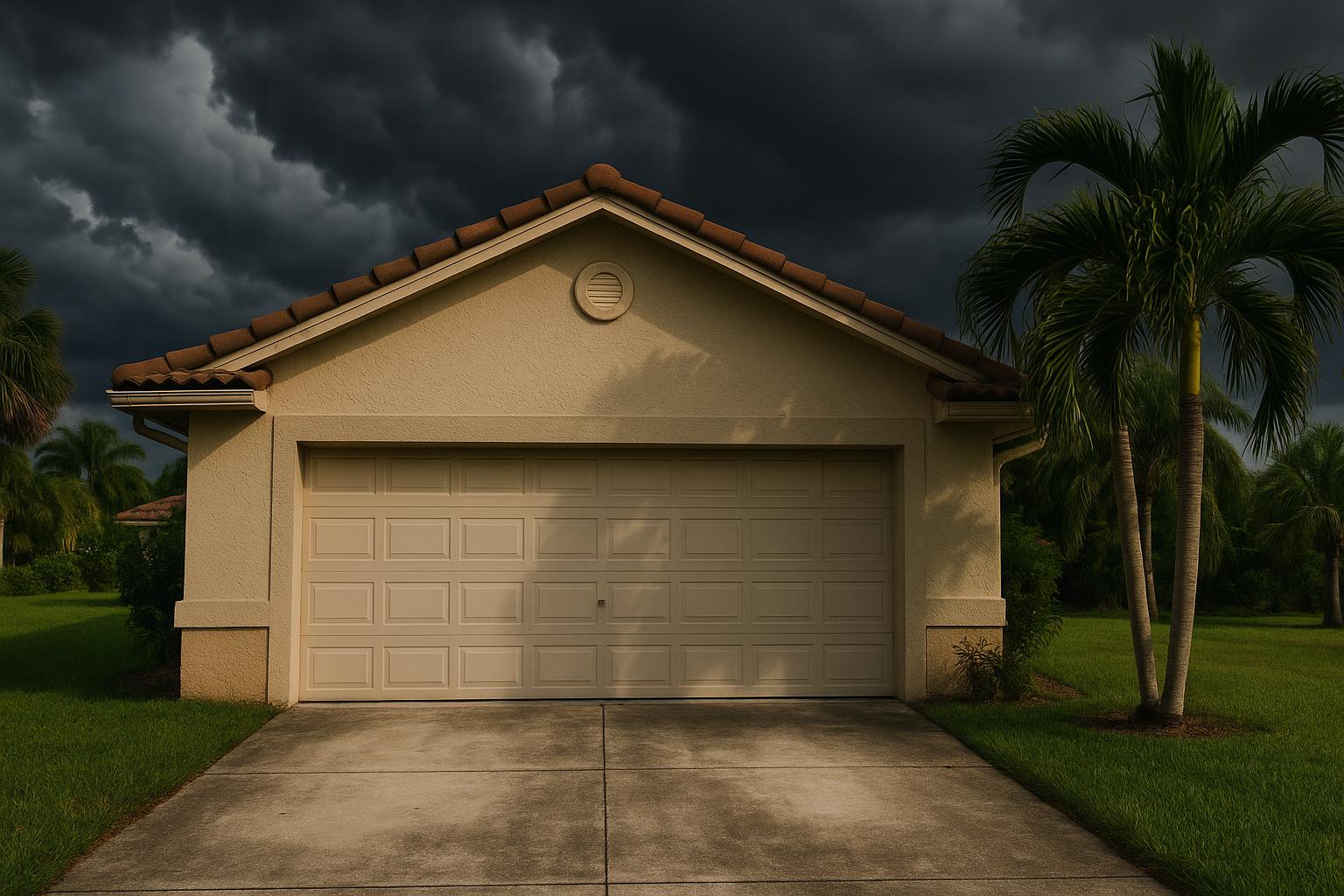
Your Garage Door Is Your Home's Most Vulnerable Point in a Storm
When hurricane season rolls around in North Florida, most homeowners think about stocking up on water, charging flashlights, and boarding up windows. But there's one critical part of your home that often gets overlooked — your garage door.
Your garage door is likely the largest opening on your home. If it fails during a hurricane, wind can rush inside, create intense pressure, and potentially blow off your roof or collapse walls. For homeowners in Lake City and the surrounding areas, preparing your garage door for storm season isn't optional — it's essential.
Here's a practical guide to making sure your garage door is ready to stand up to whatever hurricane season throws at it.
Why Garage Doors Are So Vulnerable During Hurricanes
Garage doors span a wide opening, typically 8 to 16 feet across, and they're designed to move up and down — not to resist lateral force. Standard residential garage doors are built from relatively lightweight materials like thin steel or aluminum panels. Without reinforcement, they can buckle, bend, or blow inward under high winds.
Once your garage door gives way, the consequences can be catastrophic. Wind enters the enclosed space and pushes outward against the roof and walls from the inside. This is one of the leading causes of structural failure during hurricanes, and it's entirely preventable with the right preparation.
Step 1: Inspect Your Garage Door Before Storm Season
The best time to assess your garage door's condition is well before a storm is on the radar. Walk through this checklist every spring:
- Check the panels: Look for dents, cracks, rust, or warping. Damaged panels are structurally weaker and more likely to fail under pressure.
- Examine the tracks and rollers: Bent tracks or worn rollers can prevent the door from seating properly in its frame, leaving gaps that wind can exploit.
- Test the weatherstripping: The rubber seals along the bottom and sides of your door should be intact. Deteriorated weatherstripping allows wind-driven rain inside and reduces the door's overall seal.
- Inspect the hardware: Hinges, brackets, and fasteners should be tight and free of corrosion. Loose hardware weakens the entire assembly.
If you find any issues during your inspection, getting them repaired before hurricane season is far easier and less expensive than dealing with storm damage after the fact.
Step 2: Consider a Hurricane-Rated Garage Door
If your garage door is older or wasn't designed to meet wind-load requirements, upgrading to a hurricane-rated door is one of the smartest investments you can make. These doors are engineered and tested to withstand specific wind speeds and impact from flying debris.
Hurricane-rated garage doors are built with reinforced panels, heavier gauge steel, and integrated bracing systems. Many also come with impact-resistant features that protect against debris strikes — a common cause of garage door failure during storms.
For homeowners in Lake City who are already considering a garage door replacement, choosing a wind-rated model gives you both everyday functionality and serious storm protection. It can also lower your homeowner's insurance premiums, since many insurers offer discounts for wind mitigation features.
Step 3: Install a Garage Door Bracing Kit
If replacing your garage door isn't in the budget right now, a bracing kit is an effective and affordable alternative. These kits use horizontal bars that attach to the inside of your garage door panels and anchor into the wall or floor, adding significant rigidity to the door.
There are two main types of bracing systems:
- Permanent bracing: Installed once and left in place year-round. These systems add structural strength without requiring any action when a storm approaches.
- Temporary bracing: Designed to be installed when a storm warning is issued and removed afterward. These are less convenient but still effective when properly installed.
A professional installation ensures the bracing is anchored correctly and distributes force evenly across the door. Improperly installed bracing can actually cause more damage by concentrating stress on specific points.
Step 4: Reinforce the Tracks and Hardware
Even a strong door can fail if the tracks and mounting hardware aren't up to the task. During a professional hurricane preparation service, a technician will typically:
- Replace standard hinges with heavier-duty versions
- Add additional brackets along the horizontal tracks
- Secure the vertical tracks with stronger anchors
- Ensure the header bracket above the door is properly fastened to structural framing
These upgrades work together with bracing to create a garage door system that can handle sustained high winds and sudden gusts.
Step 5: Don't Forget Your Garage Door Opener
Your automatic garage door opener plays a role in storm preparedness too. During a hurricane, you should disengage your opener by pulling the emergency release cord. This allows the door to sit firmly in its tracks under its own weight rather than relying on the opener mechanism, which can strip or break under wind pressure.
If you lose power during a storm — which is common in Lake City and throughout Columbia County — you'll also need to operate the door manually. Make sure you know how to use the emergency release and that the door moves smoothly by hand. A door that's difficult to lift manually may have spring or balance issues that should be addressed before storm season.
Step 6: Have a Professional Assessment Done
While there's a lot you can do on your own, a professional garage door technician can identify vulnerabilities that aren't obvious to the untrained eye. A pre-hurricane assessment typically includes:
- A full mechanical inspection of springs, cables, and hardware
- A wind-load evaluation based on your door's size and construction
- Recommendations for bracing, reinforcement, or replacement
- Lubrication and adjustment to ensure smooth operation
At Lake City Garage & Gate, we help homeowners throughout Lake City, Fort White, Live Oak, and the surrounding communities get their garage doors storm-ready every year. We know the specific challenges that North Florida weather presents, and we tailor our recommendations to your door, your home, and your budget.
Don't Wait Until a Storm Is on the Way
Every hurricane season, we see a surge of calls from homeowners scrambling to prepare at the last minute. The problem is that by the time a storm is approaching, parts may be hard to find, schedules fill up fast, and there's simply not enough time to do the job right.
The best approach is to schedule your garage door inspection and any necessary upgrades during the spring or early summer — well before the peak of hurricane season in August and September.
Whether you need a simple tune-up, a bracing kit installation, or a full garage door replacement with a hurricane-rated model, getting ahead of the storm gives you peace of mind and protects your biggest investment — your home.
Ready to Hurricane-Proof Your Garage Door?
Lake City Garage & Gate is here to help you prepare. Contact us today to schedule a storm-readiness inspection or to learn more about hurricane-rated garage door options available for your home. We proudly serve Lake City, Macclenny, Lake Butler, High Springs, and all surrounding areas.